Every day, we enter into agreements without even realizing it. Buying a mobile phone, hiring a cab, ordering products online, signing an employment offer, renting a house, or starting a business partnership—all these transactions are based on contracts. While many agreements are simple and informal, some involve significant financial and legal obligations. This is where the Indian Contract Act, 1872 becomes important.
The Indian Contract Act is one of the foundational business laws in India. It lays down the legal rules for making valid contracts, defining the rights and duties of parties, and resolving disputes when contractual obligations are not fulfilled. Whether you are a business owner, employee, entrepreneur, student, freelancer, landlord, or consumer, understanding the basics of this law can help you make informed decisions, avoid legal disputes, and protect your interests.

Indian Contract Act, 1872: Overview
| Particular | Details |
|---|---|
| Full Name | Indian Contract Act, 1872 |
| Enacted | 1872 |
| Applicable Throughout | India (subject to applicable legal provisions) |
| Purpose | Regulate contracts and define the rights and obligations of contracting parties |
| Covers | Formation, performance, breach, indemnity, guarantee, bailment, agency, and related matters |
| Governing Principle | Agreements enforceable by law become contracts |
| Importance | Provides legal certainty for personal and commercial transactions |
What is the Indian Contract Act, 1872?
The Indian Contract Act, 1872 is the principal legislation governing contracts in India. It establishes the legal framework for creating valid agreements and specifies when an agreement becomes legally enforceable.
The Act governs various aspects of contractual relationships, including offer and acceptance, lawful consideration, free consent, performance of contracts, breach of contract, indemnity, guarantee, bailment, pledge, and agency. It plays a vital role in supporting commercial activities and ensuring that parties honour their legal commitments.
Why is the Indian Contract Act Important?
Contracts form the backbone of business and everyday transactions. Without clear legal rules, disputes over promises and obligations would become difficult to resolve.
The Act is important because it:
- Provides certainty in commercial transactions.
- Protects the rights of contracting parties.
- Encourages fair business practices.
- Supports economic growth.
- Reduces contractual disputes.
- Provides legal remedies for breach of contract.
It helps create trust between individuals and businesses by ensuring that legally enforceable promises are respected.
Essential Elements of a Valid Contract
Not every agreement becomes a legally enforceable contract. Certain essential conditions must generally be satisfied.
1. Offer and Acceptance
A valid contract begins with one party making a lawful offer and the other party accepting it without material changes.
Both parties must clearly understand and agree to the same terms.
2. Lawful Consideration
Consideration refers to something of value exchanged between the parties.
Examples include:
- Money
- Goods
- Services
- A promise to perform or refrain from an act
The consideration must be lawful.
3. Free Consent
Consent must be given voluntarily.
Consent is generally not considered free if obtained through:
- Coercion
- Undue influence
- Fraud
- Misrepresentation
- Mistake, where legally relevant
Contracts entered into without free consent may be voidable or otherwise affected under the Act.
4. Competent Parties
The parties entering into the contract should be legally competent.
Generally, this means they should:
- Have attained the age of majority.
- Be of sound mind.
- Not be disqualified from contracting under any applicable law.
5. Lawful Object
The purpose of the contract must be lawful.
Agreements involving illegal activities or acts opposed to public policy are generally unenforceable.
Types of Contracts Under the Indian Contract Act
The Act recognizes different types of contracts depending on their nature and legal effect.
Express Contract
The terms are clearly communicated, either orally or in writing.
Example:
A written employment agreement.
Implied Contract
The contract is inferred from the conduct of the parties rather than explicit words.
Example:
Boarding a public bus and paying the fare.
Void Contract
A contract that was initially valid but subsequently becomes unenforceable due to circumstances recognized by law.
Voidable Contract
A contract that may be enforced or cancelled at the option of one of the parties under circumstances provided by the Act.
Contingent Contract
A contract that depends on the occurrence or non-occurrence of a future uncertain event.
Example: An agreement linked to an insurance claim.
Performance of Contracts
After entering into a valid contract, the parties are expected to perform their respective obligations according to the agreed terms.
Performance may involve:
- Delivery of goods.
- Payment of money.
- Rendering services.
- Completion of agreed work.
- Transfer of property.
Failure to perform contractual obligations without lawful justification may result in legal consequences.
Breach of Contract
A breach occurs when a party fails to fulfil its contractual obligations without a valid legal excuse.
Common examples include:
- Non-payment.
- Failure to deliver goods.
- Delay in performance.
- Refusal to perform agreed services.
- Violation of contractual terms.
The aggrieved party may seek remedies available under the law.
Remedies for Breach of Contract
The Indian Contract Act provides various remedies depending on the facts of each case.
Common legal remedies include:
Compensation or Damages
The affected party may claim compensation for losses resulting from the breach, subject to the applicable legal principles.
Specific Performance
In appropriate cases and subject to applicable laws, a court may direct a party to perform its contractual obligations instead of merely paying compensation.
Injunction
A court may restrain certain actions where permitted by law.
Rescission
In certain circumstances, the contract may be cancelled and the parties restored to their original position as far as possible.
Other Important Provisions Under the Act
The Indian Contract Act also contains provisions relating to several important legal concepts.
Contract of Indemnity
One party agrees to compensate another for specified losses.
Contract of Guarantee
A third person promises to discharge the liability of another if that person defaults.
Bailment
Goods are delivered by one person to another for a specific purpose, with an obligation to return or otherwise deal with the goods according to the agreement.
Pledge
A pledge involves delivering goods as security for repayment of a debt or performance of an obligation.
Agency
An agent is authorized to act on behalf of another person (the principal) in dealings with third parties.
Agency relationships are widely used in business transactions.
Importance of the Indian Contract Act in Modern Business
The Indian Contract Act remains highly relevant in today’s economy.
It governs contracts relating to:
- Business agreements.
- Employment contracts.
- E-commerce transactions.
- Construction projects.
- Banking services.
- Insurance.
- Real estate.
- Technology services.
- Online marketplaces.
As digital commerce continues to grow, contractual relationships increasingly involve electronic communications and digital documentation, while remaining subject to applicable legal principles.
Practical Tips Before Signing a Contract
Before entering into any important agreement:
- Read all terms carefully.
- Verify the identity of the other party.
- Understand payment obligations.
- Check timelines and responsibilities.
- Keep written records wherever possible.
- Clarify dispute resolution clauses.
- Seek professional advice for complex transactions.
Careful review can prevent future misunderstandings and disputes.
Frequently Asked Questions (FAQs)
1. Is every agreement a contract under the Indian Contract Act?
No. Only agreements that satisfy the legal requirements prescribed under the Act and are enforceable by law become valid contracts.
2. Can an oral contract be legally valid?
Yes. An oral contract may be legally enforceable if it satisfies the essential requirements of a valid contract, although written contracts generally provide stronger evidence in case of disputes.
3. What happens if one party breaches a contract?
The affected party may seek legal remedies such as compensation, specific performance, injunction, or other relief available under the applicable law, depending on the circumstances.
4. Does the Indian Contract Act apply to online agreements?
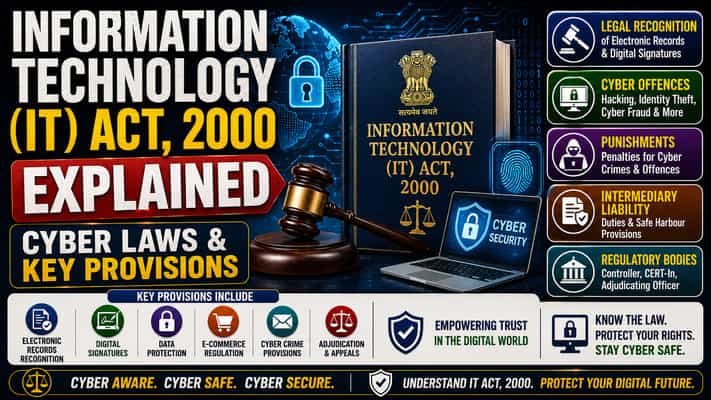
Yes. Many online agreements and electronic contracts are recognized under Indian law, subject to the Indian Contract Act, the Information Technology Act, 2000, and other applicable legal provisions.
Disclaimer: This article is intended for general informational and educational purposes only. It provides a simplified overview of the Indian Contract Act, 1872 and should not be treated as legal advice. The application of contract law depends on the specific facts of each case, applicable amendments, and judicial interpretation. Individuals and businesses should consult a qualified legal professional for advice regarding specific contractual or legal matters.