
Every year, millions of individuals and businesses in India file income tax returns, pay taxes, and claim deductions. Whether you are a salaried employee, freelancer, business owner, investor, or retiree, understanding the country’s income tax laws is essential for proper financial planning and legal compliance. Many taxpayers are unsure about taxable income, deductions, exemptions, tax filing deadlines, and the powers of the Income Tax Department. This is where the Income-tax Act, 1961 becomes important.
The Income-tax Act, 1961 is India’s primary legislation governing the levy, collection, administration, and recovery of income tax. It defines various sources of taxable income, specifies deductions and exemptions, lays down assessment procedures, and prescribes penalties for non-compliance. Over the years, the Act has been amended several times to meet changing economic needs and strengthen tax administration. Understanding this law helps taxpayers avoid legal issues while making informed financial decisions.
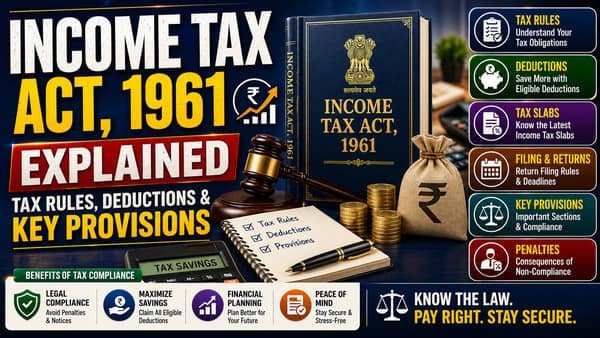
Income-tax Act, 1961: Overview
| Particular | Details |
|---|---|
| Full Name | Income-tax Act, 1961 |
| Enacted | 1961 |
| Objective | Govern the levy, collection, assessment, and recovery of income tax in India |
| Applicable To | Individuals, Hindu Undivided Families (HUFs), firms, companies, LLPs, trusts, and other taxpayers covered under the Act |
| Administered By | Central Board of Direct Taxes (CBDT) and the Income Tax Department |
| Covers | Taxable income, deductions, exemptions, tax returns, assessments, penalties, appeals, and compliance |
| Importance | Forms the legal foundation of India’s direct tax system |
What is the Income-tax Act, 1961?
The Income-tax Act, 1961 is the principal law that regulates income tax in India. It provides the legal framework for determining taxable income, calculating tax liability, collecting taxes, conducting assessments, and resolving tax disputes.
The Act applies to different categories of taxpayers and governs income earned from various sources, including salary, business, investments, property, and capital gains. It also authorizes the Income Tax Department to administer tax laws and ensure compliance.
Why Was the Income-tax Act Introduced?
The Act was enacted to create a comprehensive and uniform system for direct taxation in India.
Its major objectives include:
- Levy income tax fairly.
- Generate revenue for the Government.
- Regulate tax administration.
- Encourage voluntary tax compliance.
- Prevent tax evasion.
- Provide deductions and incentives.
- Support economic development.
The legislation plays a vital role in financing public infrastructure, healthcare, education, defence, and welfare schemes.
Who is Covered Under the Income-tax Act?
The Act applies to various categories of taxpayers, including:
- Individuals.
- Hindu Undivided Families (HUFs).
- Partnership firms.
- Limited Liability Partnerships (LLPs).
- Companies.
- Trusts.
- Associations of Persons (AOPs).
- Other entities recognized under the Act.
The tax liability of each taxpayer depends on factors such as residential status, nature of income, and applicable tax provisions.
Heads of Income Under the Act
The Income-tax Act classifies taxable income into different heads.
1. Income from Salary
This includes:
- Basic salary.
- Allowances.
- Bonus.
- Perquisites.
- Pension, where applicable.
Salary income is taxed according to the applicable provisions of the Act.
2. Income from House Property
Income earned from owning residential or commercial property may be taxable under this head, subject to deductions and other provisions prescribed by the Act.
3. Profits and Gains from Business or Profession
Income earned through business activities, professional services, freelancing, consultancy, or self-employment is generally taxable under this category.
4. Capital Gains
Profits arising from the transfer of capital assets such as land, buildings, shares, or securities may be taxable as capital gains, depending on the applicable provisions.
5. Income from Other Sources
Certain types of income that do not fall under the previous categories may be taxed under this head.
Examples include:
- Interest income.
- Dividend income (subject to applicable provisions).
- Family pension.
- Certain gifts, where taxable under the law.
Deductions Under the Income-tax Act
The Act provides various deductions that help reduce taxable income, subject to specified conditions.
Some commonly claimed deductions relate to:
- Investments in eligible savings instruments.
- Health insurance premiums.
- Home loan interest (where applicable).
- Education loan interest.
- Donations to eligible institutions.
- Retirement savings.
The availability and limits of deductions depend on the applicable provisions and the chosen tax regime.
Filing Income Tax Returns (ITR)
Eligible taxpayers are generally required to file an Income Tax Return (ITR) within the prescribed timelines.
Filing an ITR helps:
- Report income accurately.
- Claim eligible refunds.
- Carry forward certain losses where permitted.
- Demonstrate financial compliance.
- Facilitate loan and visa applications.
Timely filing also helps avoid interest, penalties, and other legal consequences.
Powers of the Income Tax Department
The Income Tax Department is responsible for administering the Act.
Its functions include:
- Processing tax returns.
- Conducting assessments.
- Issuing notices.
- Collecting taxes.
- Investigating tax evasion.
- Conducting searches and surveys where legally authorized.
- Recovering outstanding tax dues.
These powers are exercised in accordance with the provisions of the Act and applicable legal safeguards.
Penalties for Non-Compliance
Failure to comply with the Income-tax Act may result in legal consequences.
Depending on the nature of the default, these may include:
- Interest on unpaid taxes.
- Monetary penalties.
- Prosecution in specified cases.
- Additional tax demands.
- Other actions authorized under the Act.
Maintaining accurate financial records helps reduce the risk of non-compliance.
Importance of the Income-tax Act
The Income-tax Act is one of India’s most significant fiscal legislations.
Its importance includes:
- Financing government expenditure.
- Promoting tax compliance.
- Supporting economic growth.
- Encouraging savings and investments.
- Regulating direct taxation.
- Ensuring fairness in tax administration.
It serves as the backbone of India’s direct tax system.
Practical Tax Tips for Taxpayers
To remain compliant with tax laws:
- Maintain proper financial records.
- File Income Tax Returns on time.
- Keep investment proofs safely.
- Verify Form 26AS and the Annual Information Statement (AIS), where applicable.
- Respond promptly to official notices.
- Seek professional advice for complex tax matters.
Good record-keeping simplifies tax compliance and reduces future disputes.
Frequently Asked Questions (FAQs)
1. Who is required to file an Income Tax Return?
The requirement to file an Income Tax Return depends on factors such as income, residential status, age, and other conditions prescribed under the Income-tax Act and applicable rules.
2. What are the five heads of income under the Income-tax Act?
The five heads of income are Salary, House Property, Profits and Gains from Business or Profession, Capital Gains, and Income from Other Sources.
3. Can deductions reduce taxable income?
Yes. Eligible taxpayers may claim deductions under various provisions of the Act, subject to the applicable conditions and limits.
4. What happens if a taxpayer does not file an Income Tax Return?
Failure to file a return where required may result in interest, penalties, delayed refunds, or other legal consequences under the Income-tax Act.
Disclaimer: This article is intended for general informational and educational purposes only. It provides a simplified overview of the Income-tax Act, 1961 and should not be considered legal, financial, or tax advice. Tax laws are subject to amendments through Finance Acts, government notifications, CBDT circulars, and judicial decisions. The applicability of tax provisions depends on the facts of each case, the taxpayer’s status, and the relevant assessment year. For advice on specific tax matters, consult a qualified chartered accountant, tax professional, or legal expert.