
Drug-related offences are a serious concern in India because they affect not only public health but also law and order, national security, and the future of young people. Every year, authorities seize illegal narcotic substances, arrest drug traffickers, and investigate cases involving the possession, transportation, manufacturing, and sale of prohibited drugs. To combat these offences, India has enacted strict laws, with the Narcotic Drugs and Psychotropic Substances (NDPS) Act, 1985 serving as the primary legislation in this area.
Whether you are a student, traveller, healthcare professional, business owner, or simply a responsible citizen, understanding the NDPS Act is important. The law regulates narcotic drugs and psychotropic substances while also providing legal safeguards for their medical and scientific use. It prescribes strict punishments for illegal drug-related activities and lays down procedures for investigation, prosecution, and enforcement. Awareness of this law can help individuals avoid legal violations and better understand India’s approach to controlling narcotic drugs.
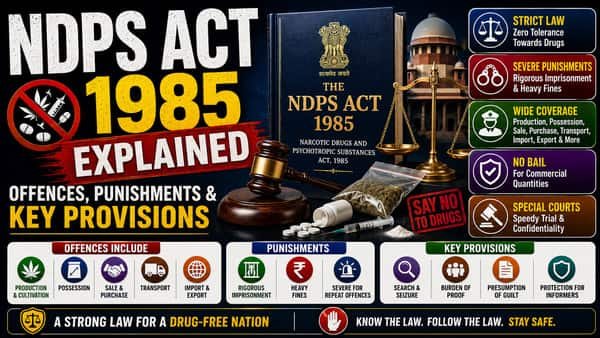
NDPS Act, 1985: Overview
| Particular | Details |
|---|---|
| Full Name | Narcotic Drugs and Psychotropic Substances Act, 1985 |
| Common Name | NDPS Act, 1985 |
| Enacted | 1985 |
| Objective | Control and regulate narcotic drugs and psychotropic substances in India |
| Applicable To | Offences relating to narcotic drugs, psychotropic substances, and controlled substances as specified under the law |
| Administered By | Central and State enforcement agencies |
| Covers | Possession, production, manufacture, transport, sale, purchase, import, export, consumption, and trafficking of prohibited substances |
| Importance | Prevents drug abuse and combats illegal drug trafficking |
What is the NDPS Act, 1985?
The Narcotic Drugs and Psychotropic Substances (NDPS) Act, 1985 is India’s principal law for regulating narcotic drugs and psychotropic substances. It prohibits a wide range of activities involving specified substances unless they are permitted under the law for medical, scientific, or other authorized purposes.
The Act also empowers enforcement agencies to investigate drug-related offences and prescribes stringent punishments for illegal activities. Over the years, the legislation has been amended to strengthen enforcement, address emerging forms of drug trafficking, and improve international cooperation.
Why Was the NDPS Act Introduced?
Before the NDPS Act, different laws governed various aspects of narcotic drugs, leading to inconsistencies in enforcement. With increasing concerns about drug abuse and illegal trafficking, a comprehensive legal framework became necessary.
The Act was introduced to:
- Prevent illegal drug trafficking.
- Regulate narcotic and psychotropic substances.
- Protect public health.
- Fulfil India’s international treaty obligations.
- Provide strict punishment for drug-related offences.
- Prevent misuse of controlled substances.
The law seeks to balance effective law enforcement with the legitimate medical and scientific use of certain substances.
What Are Narcotic Drugs and Psychotropic Substances?
The NDPS Act regulates substances that are specifically notified or covered under its provisions.
Narcotic Drugs
These generally include certain substances derived from or related to opium, cannabis, coca, and other drugs specified under the Act and the applicable notifications.
Psychotropic Substances
These are substances that affect the mind, mood, perception, or behaviour and are specifically listed under the law or relevant schedules.
The legal status of a substance depends on whether it is covered under the Act and the applicable government notifications.
Activities Regulated Under the NDPS Act
The Act regulates various activities involving specified substances.
These include:
- Cultivation
- Production
- Manufacture
- Possession
- Sale
- Purchase
- Storage
- Transportation
- Import
- Export
- Consumption
- Distribution
- Use
These activities are generally prohibited unless specifically permitted under the law or authorized by the appropriate authority.
Key Provisions of the NDPS Act
1. Strict Control Over Narcotic Drugs
The Act imposes strict restrictions on narcotic drugs and psychotropic substances to prevent illegal use and trafficking.
Only authorized persons or institutions may deal with specified substances for approved purposes.
2. Regulation of Medical and Scientific Use
Certain narcotic drugs and psychotropic substances may be legally used for medical, scientific, or research purposes, subject to licences, permissions, and regulatory requirements.
Hospitals, pharmaceutical companies, and research institutions must comply with the applicable legal framework.
3. Quantity-Based Punishments
The NDPS Act distinguishes offences based on the quantity of the prohibited substance involved.
The law generally classifies quantities into:
- Small quantity
- Quantity lesser than commercial quantity but greater than small quantity (often referred to as an intermediate quantity)
- Commercial quantity
The nature of the offence and the punishment may vary depending on the category and the specific facts of the case.
4. Investigation and Search Powers
The Act grants authorized officers powers relating to search, seizure, and arrest, subject to the safeguards and procedures prescribed by law.
Compliance with these procedures is important during investigation and prosecution.
Common Offences Under the NDPS Act
Some of the offences covered by the Act include:
- Illegal possession of prohibited substances.
- Drug trafficking.
- Manufacturing narcotic drugs without authorization.
- Transporting prohibited substances illegally.
- Selling or purchasing illegal drugs.
- Financing illicit drug trafficking.
- Harbouring offenders involved in drug offences.
The seriousness of the offence depends on the applicable legal provisions and the circumstances of each case.
Punishments Under the NDPS Act
The NDPS Act prescribes stringent punishments for offences.
Depending on factors such as the nature of the offence, the type of substance, and the quantity involved, penalties may include:
- Imprisonment.
- Monetary fines.
- Enhanced punishment for repeat offenders.
- Confiscation of property in appropriate cases as provided by law.
The court determines the punishment after considering the evidence and the relevant provisions of the Act.
Rights and Legal Safeguards
Although the Act contains strict provisions, legal safeguards also exist.
Persons facing proceedings under the Act are entitled to:
- A fair investigation.
- Legal representation.
- Protection of their legal rights during criminal proceedings.
- Trial before a competent court.
- The benefit of procedural safeguards provided under the law.
Courts examine whether investigations have been conducted in accordance with the prescribed legal procedures.
Importance of the NDPS Act
The NDPS Act plays an important role in protecting society from the harmful effects of illegal drugs.
Its significance includes:
- Reducing drug trafficking.
- Protecting public health.
- Combating organized crime.
- Supporting national security.
- Preventing substance abuse.
- Regulating medical use of controlled substances.
It also enables India to fulfil its commitments under various international conventions relating to narcotic drugs and psychotropic substances.
Practical Tips for Citizens
To avoid legal issues under the NDPS Act:
- Never possess or transport prohibited substances without lawful authority.
- Purchase medicines only from licensed pharmacies.
- Carry valid prescriptions for medicines containing regulated substances, where required.
- Verify legal requirements before transporting medicines across State or international borders.
- Report suspicious drug trafficking activities to the appropriate authorities.
Being aware of the law helps individuals avoid unintentional violations.
Frequently Asked Questions (FAQs)
1. Does the NDPS Act prohibit all narcotic drugs?
No. Certain narcotic drugs and psychotropic substances may be legally used for medical, scientific, or research purposes, subject to the permissions and conditions prescribed under the law.
2. Are punishments under the NDPS Act the same for every offence?
No. Punishments depend on factors such as the type of offence, the substance involved, the quantity, and other circumstances specified under the Act.
3. Can prescription medicines be covered under the NDPS Act?
Some prescription medicines containing regulated narcotic or psychotropic substances may be governed by the Act and related rules. Their manufacture, sale, possession, and use must comply with applicable legal requirements.
4. Why is the quantity of the substance important under the NDPS Act?
The Act classifies offences based on the quantity of the substance involved. This classification is one of the factors considered in determining the applicable punishment and legal consequences.
Disclaimer: This article is intended for general informational and educational purposes only. It provides a simplified overview of the Narcotic Drugs and Psychotropic Substances (NDPS) Act, 1985 and should not be considered legal or medical advice. The application of the Act depends on the facts of each case, applicable amendments, notifications, and judicial interpretation. Individuals facing legal issues or seeking guidance regarding regulated substances should consult a qualified legal professional or the appropriate authorities.