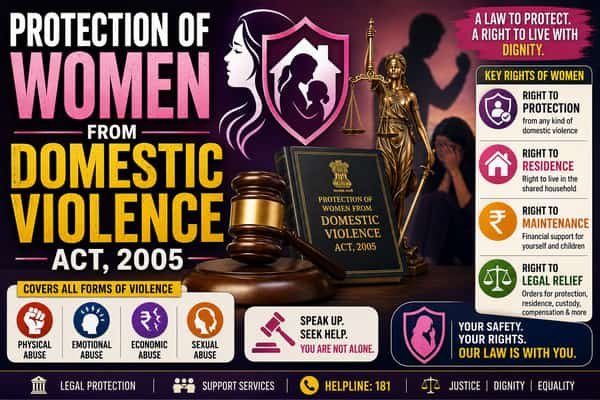
Home should be the safest place for every individual. However, for many women, domestic violence can become a painful reality that affects their physical health, emotional well-being, financial security, and dignity. Domestic violence is not limited to physical assault—it may also include emotional abuse, verbal humiliation, economic control, sexual abuse, and other forms of harassment within a domestic relationship. Recognizing the need for stronger legal protection, India enacted the Protection of Women from Domestic Violence Act, 2005 (PWDVA).
The Act provides women with a civil legal remedy to seek immediate protection, residence, financial relief, custody orders, and compensation without necessarily filing for divorce or initiating criminal proceedings. It aims to ensure that women can live in a violence-free environment while preserving their legal rights. Whether you are a woman seeking information, a family member, social worker, employer, or student, understanding this law is important because it promotes awareness, safety, and access to justice.
Protection of Women from Domestic Violence Act, 2005: Overview
| Particular | Details |
|---|---|
| Full Name | Protection of Women from Domestic Violence Act, 2005 |
| Common Name | Domestic Violence Act or PWDVA |
| Enacted | 2005 |
| Effective From | 26 October 2006 |
| Objective | Protect women from domestic violence and provide civil legal remedies |
| Applicable To | Women in domestic relationships as covered under the Act |
| Covers | Physical, emotional, verbal, sexual, and economic abuse |
| Key Authorities | Magistrates, Protection Officers, Service Providers, and Police |
| Importance | Protects women’s rights, safety, residence, and dignity |
What is the Protection of Women from Domestic Violence Act, 2005?
The Protection of Women from Domestic Violence Act, 2005 is a special law enacted to protect women who face violence or abuse within a domestic relationship. Unlike laws that primarily focus on criminal punishment, this Act provides immediate civil remedies to help women secure protection, shelter, financial assistance, and other relief.
The Act recognizes that domestic violence can occur in various forms and that women may require urgent legal protection while continuing to reside in or separate from the shared household. It therefore establishes a comprehensive mechanism involving courts, Protection Officers, police authorities, and registered service providers.
Why Was the Domestic Violence Act Introduced?
Before this legislation, legal remedies for domestic abuse were limited and often did not address the immediate needs of victims.
The Act was introduced to:
- Protect women from all forms of domestic violence.
- Provide quick legal remedies.
- Ensure the right to reside in the shared household.
- Prevent further abuse.
- Provide financial relief where appropriate.
- Protect children affected by domestic violence.
- Promote dignity and equality for women.
The law reflects India’s commitment to safeguarding women’s constitutional rights.
Who is Protected Under the Act?
The Act protects women who are in a domestic relationship with the respondent.
This may include women who are:
- Married.
- Living in a relationship recognized under the law.
- Mothers.
- Sisters.
- Daughters.
- Widows.
- Female relatives living in a shared household.
The applicability of the Act depends on the facts of each case and the legal requirements prescribed under the legislation.
What is Considered Domestic Violence?
The Act adopts a broad understanding of domestic violence.
1. Physical Abuse
This includes acts that cause bodily pain, injury, danger to life, or impairment of health.
Examples include:
- Assault
- Beating
- Physical intimidation
- Wrongful restraint
2. Emotional and Verbal Abuse
Domestic violence is not limited to physical harm.
It may also include:
- Continuous insults
- Humiliation
- Threats
- Character assassination
- Verbal intimidation
Such behaviour can significantly affect a person’s mental health and dignity.
3. Economic Abuse
Economic abuse involves controlling or restricting a woman’s financial resources.
Examples include:
- Denying access to money.
- Withholding maintenance.
- Preventing employment.
- Disposing of assets without consent.
- Restricting access to household necessities.
4. Sexual Abuse
The Act also recognizes sexual abuse occurring within a domestic relationship.
This may include unwelcome sexual conduct or acts that violate a woman’s dignity and bodily autonomy.
Rights of Women Under the Domestic Violence Act
The Act grants several important legal rights to women.
Right to Protection
A woman may seek a Protection Order from the court to prevent further acts of domestic violence.
Right to Residence
A woman has the right to reside in the shared household in accordance with the provisions of the Act.
This protection exists even if she does not own the property.
Right to Monetary Relief
The court may grant monetary relief to help meet expenses resulting from domestic violence.
Depending on the circumstances, this may relate to:
- Medical expenses.
- Loss of earnings.
- Maintenance.
- Property damage.
Right to Custody Orders
Where appropriate, the court may grant temporary custody orders relating to children in accordance with the law.
Right to Compensation
The court may award compensation or damages for injuries, including mental distress and emotional suffering, where justified under the Act.
Role of Protection Officers
The Act provides for the appointment of Protection Officers.
Their responsibilities include:
- Assisting victims in filing complaints.
- Preparing domestic incident reports.
- Helping women obtain legal remedies.
- Coordinating with police and service providers.
- Facilitating access to shelter homes and medical assistance.
They play a key role in supporting victims throughout the legal process.
Role of Service Providers
Registered service providers may assist victims by providing:
- Medical assistance.
- Counselling.
- Shelter.
- Legal guidance.
- Emotional support.
These services help women access immediate protection and rehabilitation.
How to Seek Relief Under the Act
A woman facing domestic violence may seek legal remedies by:
Step 1: Reporting the Incident
She may approach:
- A Protection Officer.
- The nearest police station.
- A registered service provider.
- A Magistrate.
- A qualified legal practitioner.
Step 2: Filing an Application
An application may be submitted before the appropriate Magistrate seeking one or more reliefs available under the Act.
Step 3: Court Proceedings
The Magistrate examines the matter and may pass appropriate interim or final orders based on the facts and evidence.
Importance of the Domestic Violence Act
The Act has significantly strengthened legal protection for women in India.
Its importance includes:
- Recognizing multiple forms of domestic violence.
- Providing speedy civil remedies.
- Protecting women’s housing rights.
- Supporting financial security.
- Encouraging reporting of abuse.
- Promoting dignity, equality, and safety.
The law also emphasizes rehabilitation and protection rather than focusing solely on punishment.
Practical Steps for Women Facing Domestic Violence
If a woman experiences domestic violence, she should consider:
- Seeking immediate safety if there is imminent danger.
- Preserving evidence such as messages, medical records, or photographs where possible.
- Informing trusted family members or friends.
- Contacting the police or a Protection Officer.
- Seeking legal advice at the earliest opportunity.
- Accessing counselling or support services if needed.
Timely action can help secure legal protection and necessary assistance.
Frequently Asked Questions (FAQs)
1. Does the Domestic Violence Act apply only to physical abuse?
No. The Act also covers emotional, verbal, economic, and sexual abuse within a domestic relationship.
2. Can a woman seek protection without filing for divorce?
Yes. The Act provides independent civil remedies such as protection orders, residence orders, and monetary relief without requiring the woman to file for divorce.
3. Can a woman continue living in the shared household?
Yes. Subject to the provisions of the Act and the court’s orders, a woman has the right to seek protection of her residence in the shared household.
4. Who can help a woman file a complaint under the Domestic Violence Act?
A woman may seek assistance from a Protection Officer, police, registered service provider, Magistrate, legal professional, or other authorities as provided under the Act.
Disclaimer: This article is intended for general informational and educational purposes only. It provides a simplified overview of the Protection of Women from Domestic Violence Act, 2005 and should not be treated as legal advice. The application of the Act depends on the specific facts of each case, applicable amendments, and judicial interpretation. Women facing domestic violence or related legal issues should seek assistance from the police, a Protection Officer, a qualified legal professional, or the appropriate authorities for guidance specific to their situation.