Imagine being refused entry to a restaurant because of your caste, denied admission only because of your religion, or treated differently by a government authority because you are a woman. Such discrimination does not merely hurt an individual’s feelings—it limits access to education, employment, public spaces and opportunities that shape an entire life.
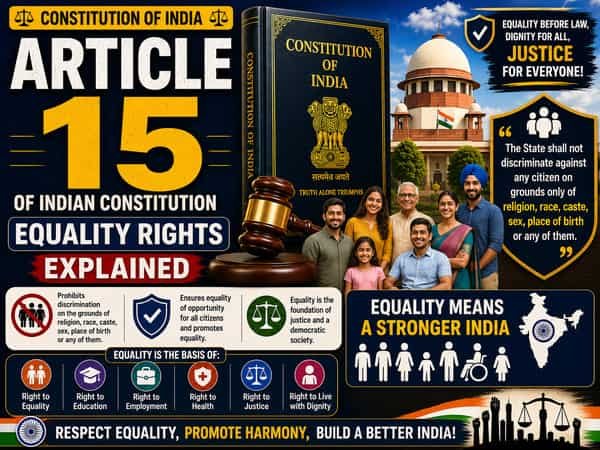
Article 15 of the Indian Constitution protects citizens from discrimination based on certain personal characteristics. At the same time, it permits the government to introduce special measures for women, children, socially and educationally backward classes, Scheduled Castes, Scheduled Tribes and economically weaker sections. This balance is important because real equality does not always come from treating everyone identically. Sometimes additional support is necessary to remove long-standing disadvantages.
Article 15 of the Indian Constitution: Overview
| Particular | Important information |
|---|---|
| Constitutional provision | Article 15 |
| Located in | Part III—Fundamental Rights |
| Main purpose | Prohibition of discrimination |
| Protection available to | Citizens of India |
| Prohibited grounds | Religion, race, caste, sex and place of birth |
| Article 15(2) | Protects access to shops, hotels and specified public places |
| Article 15(3) | Permits special provisions for women and children |
| Article 15(4) | Permits measures for backward classes, SCs and STs |
| Article 15(5) | Allows special admission provisions in educational institutions |
| Article 15(6) | Permits special provisions and reservation for EWS |
| Main remedies | High Court under Article 226 and Supreme Court under Article 32 |
What Does Article 15 Prohibit?
Article 15(1) states that the State shall not discriminate against any citizen only on the grounds of religion, race, caste, sex, place of birth or any combination of these grounds.
The word “only” is important. A government rule does not automatically become unconstitutional merely because it affects people belonging to different groups differently. The court examines whether the treatment is based only on a prohibited ground or whether there is another valid, relevant and lawful reason.
For example, a government hostel cannot normally refuse admission simply because a student belongs to a particular caste or religion. However, an age requirement for a course may be valid when it has a reasonable connection with the nature of the programme.
Article 15 protects citizens, unlike Article 14, which uses the broader expression “any person” and can also protect non-citizens.
Discrimination in Access to Public Places
Article 15(2) provides an important protection that extends beyond ordinary government action. It prevents citizens from imposing discriminatory restrictions regarding access to certain public facilities.
A citizen cannot be denied access, only on a prohibited ground, to:
- Shops
- Public restaurants
- Hotels
- Places of public entertainment
- Wells and tanks
- Public bathing ghats
- Roads
- Places of public resort
The protection applies to facilities maintained wholly or partly from State funds as well as places dedicated to public use.
This means a privately operated shop, hotel or restaurant open to the public cannot freely exclude a citizen merely because of caste, religion, race, sex or place of birth. Other laws, licence conditions and constitutional protections may also apply depending on the situation.
Does Article 15 Ban Special Benefits?
No. Article 15 does not require the government to ignore social and economic disadvantages. Clauses 3 to 6 specifically permit special measures for certain groups.
These measures are not generally treated as exceptions that weaken equality. They support substantive equality by helping people who have faced historical exclusion or unequal access to opportunities.
A scholarship for girls, a hostel for Scheduled Tribe students or a nutrition programme for children may treat one group differently, but the objective is to correct a genuine disadvantage rather than create unfair discrimination.
Special Provisions for Women and Children
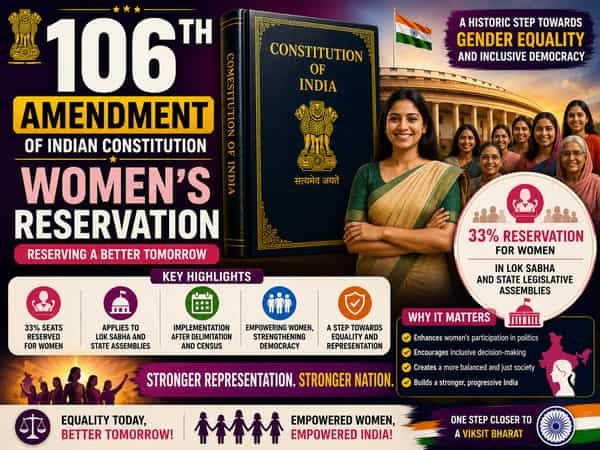
Article 15(3) permits the State to make special provisions for women and children.
This clause supports laws and schemes relating to maternity protection, women’s safety, childcare, shelters, education, nutrition and representation. It also allows the government to take account of social conditions that may place women and children at a disadvantage.
However, not every rule described as protective is automatically valid. A measure based on outdated stereotypes about women’s abilities or choices may still be examined under Articles 14, 15 and 21.
The focus should be on improving safety, dignity and equal participation rather than unnecessarily restricting personal freedom.
Provisions for Backward Classes, SCs and STs
Article 15(4) allows the State to make special provisions for the advancement of socially and educationally backward classes, Scheduled Castes and Scheduled Tribes.
It provides constitutional support for measures such as:
- Educational scholarships
- Fee concessions
- Hostels and coaching programmes
- Reservation in educational institutions
- Targeted welfare and development schemes
The identification of beneficiary groups must follow constitutional principles and applicable laws. A government cannot create classifications casually or without relevant material.
Article 15(4) concerns social and educational advancement. Reservation in public employment is primarily dealt with under Article 16.
Reservation in Educational Institutions
Article 15(5) permits special provisions relating to admission for socially and educationally backward classes, Scheduled Castes and Scheduled Tribes.
It can apply to government educational institutions as well as private institutions, whether aided or unaided by the State. However, minority educational institutions protected under Article 30(1) are excluded from this provision.
Article 15(5) does not mean that every seat in every course can be reserved without limits or procedure. Admission policies must comply with constitutional requirements, applicable legislation, judicial decisions and authorised reservation percentages.
Students should verify the current admission notification, category certificate rules and eligibility dates rather than relying on information from a previous academic year.
Economically Weaker Sections Under Article 15(6)
Article 15(6) was added through the Constitution’s 103rd Amendment. It allows the State to make special provisions for economically weaker sections other than the classes covered by Articles 15(4) and 15(5).
It also permits reservation of up to 10% of seats for EWS candidates in educational institutions. This reservation can operate in addition to existing reservations and may apply to private aided and unaided institutions. Minority educational institutions under Article 30(1) remain excluded.
EWS eligibility is determined according to income, assets and other indicators notified by the appropriate government. Possessing a low income alone may not be sufficient if the family exceeds a prescribed asset limit.
Candidates must obtain the correct certificate for the relevant financial year and application period. An outdated or incorrectly formatted certificate can result in rejection even where the applicant otherwise meets the economic conditions.
Relationship Between Articles 14, 15 and 16
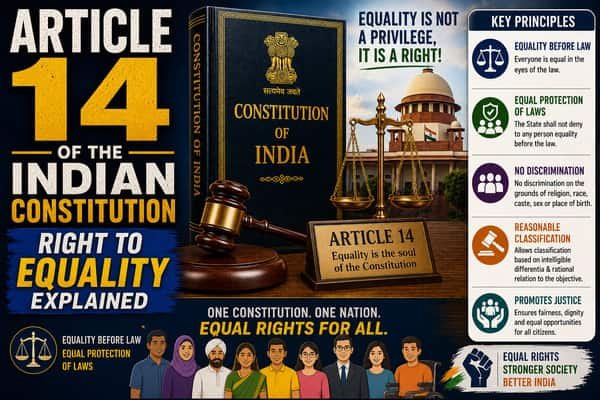
Articles 14, 15 and 16 together form an important part of the Constitution’s equality framework.
Article 14 guarantees equality before the law and equal protection of laws. Article 15 specifically prohibits discrimination on listed grounds and permits affirmative measures for disadvantaged groups. Article 16 deals mainly with equality of opportunity in public employment.
A discrimination case may involve more than one of these provisions. For example, an unreasonable admission policy may be challenged under Articles 14 and 15, while an unfair government recruitment rule may involve Articles 14 and 16.
What Can a Person Do After Facing Discrimination?
The person should first record exactly what happened, including the date, location, individuals involved and words used. Useful evidence may include:
- Written rejection letters
- Emails and messages
- Application documents
- Photographs or videos obtained lawfully
- Names of witnesses
- Admission or eligibility rules
- Receipts showing access to a public facility was refused
A written complaint may be submitted to the institution, department, district administration, police or relevant statutory commission, depending on the incident.
Where State action violates a Fundamental Right, the concerned High Court may be approached under Article 226. The Supreme Court can be approached under Article 32 for enforcement of Fundamental Rights. Legal aid may also be available through the District Legal Services Authority.
Frequently Asked Questions
Does Article 15 apply to private restaurants and shops?
Article 15(2) prohibits discriminatory restrictions regarding access to shops, public restaurants, hotels and specified public places. Therefore, a business open to the public cannot deny access only because of a citizen’s religion, race, caste, sex or place of birth.
Can a government scheme be created only for women?
Yes. Article 15(3) permits special provisions for women and children. However, the scheme should pursue a legitimate protective or equality-related objective and should not be based solely on harmful stereotypes.
Is discrimination based on language prohibited under Article 15?
Language is not separately listed in Article 15(1). However, an unreasonable language-based rule may still be examined under Article 14 or another constitutional provision, depending on its purpose and effect.
Does Article 15 guarantee reservation to every disadvantaged person?
No. Article 15 permits the State to introduce specified affirmative-action measures, but an individual must satisfy the applicable eligibility rules. The exact benefit depends on legislation, government policy, category certification and current admission conditions.
Disclaimer
This article is intended solely for general information, education and constitutional awareness. It does not constitute legal advice, an official interpretation of Article 15 or a substitute for the Constitution, legislation and judicial decisions. The legality of a classification, reservation policy or discrimination complaint depends on the facts, applicable rules and authority involved. Anyone facing denial of admission, discriminatory treatment or a constitutional dispute should consult a qualified advocate or approach the appropriate government authority, statutory commission or court. The author and publisher are not responsible for decisions taken solely on the basis of this article.