Every child deserves a safe environment, proper care, education, and the opportunity to grow into a responsible citizen. However, some children face difficult circumstances such as abandonment, abuse, neglect, trafficking, or conflict with the law. These situations require a legal system that focuses not only on justice but also on rehabilitation and the best interests of the child. To address these concerns, India enacted the Juvenile Justice (Care and Protection of Children) Act, 2015, commonly known as the Juvenile Justice Act (JJ Act).
The Act provides a comprehensive legal framework for children in need of care and protection as well as children alleged or found to be in conflict with the law. It also regulates adoption procedures, child care institutions, foster care, rehabilitation, and child welfare mechanisms. Understanding this law is important for parents, teachers, child welfare professionals, legal practitioners, students, and every citizen because it strengthens child protection and promotes children’s rights in India.
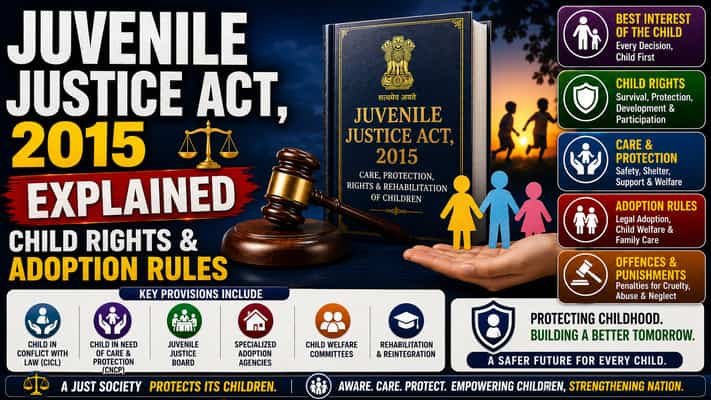
Juvenile Justice (Care and Protection of Children) Act, 2015: Overview
| Particular | Details |
|---|---|
| Full Name | Juvenile Justice (Care and Protection of Children) Act, 2015 |
| Common Name | Juvenile Justice Act or JJ Act |
| Enacted | 2015 |
| Objective | Protect, care for, rehabilitate, and ensure justice for children in need of care and protection and children in conflict with the law |
| Applicable To | Children covered under the provisions of the Act |
| Governing Authorities | Juvenile Justice Boards (JJBs), Child Welfare Committees (CWCs), and other authorities under the Act |
| Covers | Child protection, juvenile justice, adoption, foster care, rehabilitation, and child care institutions |
| Importance | Strengthens child rights and promotes rehabilitation over punishment |
What is the Juvenile Justice Act, 2015?
The Juvenile Justice (Care and Protection of Children) Act, 2015 is the principal legislation governing child protection and juvenile justice in India. It provides legal procedures for dealing with children who require care, protection, rehabilitation, or are alleged or found to be in conflict with the law.
The Act adopts a child-centric approach by emphasizing rehabilitation, social reintegration, education, counselling, and family-based care wherever possible. It also provides a legal framework for adoption and regulates institutions responsible for child welfare.
Why Was the Juvenile Justice Act Introduced?
The Act was enacted to create a modern and comprehensive child protection system consistent with constitutional principles and international child rights standards.
Its major objectives include:
- Protect vulnerable children.
- Promote rehabilitation and reintegration.
- Ensure child-friendly legal procedures.
- Regulate adoption.
- Prevent child exploitation.
- Strengthen child welfare institutions.
- Safeguard children’s rights and dignity.
The legislation recognizes that children require care, guidance, and opportunities for reform rather than purely punitive measures.
Who is Covered Under the Act?
The Act broadly applies to two categories of children:
1. Children in Conflict with the Law
These are children who are alleged or found to have committed an offence while below the age prescribed under the Act.
Their cases are dealt with through child-friendly procedures focusing on rehabilitation and reform.
2. Children in Need of Care and Protection
This category may include children who are:
- Orphaned.
- Abandoned.
- Surrendered.
- Neglected.
- Abused.
- Trafficked.
- Homeless.
- Vulnerable to exploitation.
The Act provides measures for their care, protection, rehabilitation, and long-term welfare.
Key Features of the Juvenile Justice Act
1. Juvenile Justice Boards (JJBs)
The Act provides for the establishment of Juvenile Justice Boards to deal with matters involving children in conflict with the law.
These Boards follow child-friendly procedures while ensuring that the child’s rights are protected throughout the legal process.
2. Child Welfare Committees (CWCs)
The Act establishes Child Welfare Committees to deal with children in need of care and protection.
Their responsibilities include:
- Conducting inquiries.
- Ordering rehabilitation measures.
- Arranging shelter and care.
- Ensuring the child’s best interests.
CWCs play a central role in child protection.
3. Adoption
The Act provides a comprehensive legal framework for adoption.
It lays down procedures relating to:
- Declaration of children legally free for adoption.
- Adoption by eligible prospective adoptive parents.
- Institutional oversight.
- Child welfare safeguards.
The adoption process is designed to ensure the best interests of the child.
4. Foster Care and Rehabilitation
Where appropriate, children may be placed in foster care or other rehabilitation programmes.
The objective is to provide:
- Family-based care.
- Education.
- Healthcare.
- Counselling.
- Emotional support.
- Skill development.
Rehabilitation remains a key focus of the Act.
Child-Friendly Justice System
The Act emphasizes that children should be treated differently from adults in legal proceedings.
Important principles include:
- Protection of dignity.
- Privacy of the child.
- Fair hearing.
- Rehabilitation.
- Social reintegration.
- Best interests of the child.
These principles guide authorities while dealing with children covered under the Act.
Child Care Institutions
The Act regulates various child care institutions.
These may include:
- Children’s homes.
- Observation homes.
- Special homes.
- Shelter homes.
- Open shelters.
- Specialized adoption agencies.
Such institutions are expected to comply with prescribed standards relating to care, safety, health, education, and rehabilitation.
Offences Against Children
The Act also contains provisions relating to offences involving children.
These include specified offences relating to:
- Cruelty to children.
- Child abandonment.
- Illegal adoption practices.
- Sale and procurement of children.
- Exploitation of children.
Appropriate legal action may be taken against persons responsible for such offences.
Importance of the Juvenile Justice Act
The Act has significantly strengthened child protection in India.
Its importance includes:
- Protecting vulnerable children.
- Promoting rehabilitation over punishment.
- Supporting adoption.
- Preventing child exploitation.
- Strengthening child welfare institutions.
- Ensuring child-friendly legal procedures.
It reflects the principle that every child deserves care, dignity, and opportunities for a better future.
Practical Tips for Parents and Guardians
Parents and caregivers can support child welfare by:
- Ensuring a safe home environment.
- Reporting child abuse or neglect immediately.
- Encouraging education and emotional well-being.
- Seeking professional help where needed.
- Cooperating with child protection authorities.
- Understanding children’s legal rights.
Early intervention often helps prevent long-term harm.
Frequently Asked Questions (FAQs)
1. What is the main objective of the Juvenile Justice Act, 2015?
The Act aims to protect children, promote their rehabilitation, regulate adoption, and provide child-friendly legal procedures for children in conflict with the law and children in need of care and protection.
2. What is the role of the Child Welfare Committee (CWC)?
The Child Welfare Committee examines matters relating to children in need of care and protection and may pass appropriate orders regarding their care, rehabilitation, shelter, and welfare.
3. Does the Juvenile Justice Act regulate adoption?
Yes. The Act provides a legal framework for adoption and lays down procedures to ensure that adoption takes place in the best interests of the child.
4. Why is rehabilitation important under the Juvenile Justice Act?
The Act recognizes that children require care, counselling, education, and opportunities for social reintegration. Rehabilitation helps children develop into responsible members of society while protecting their rights and dignity.
Disclaimer: This article is intended for general informational and educational purposes only. It provides a simplified overview of the Juvenile Justice (Care and Protection of Children) Act, 2015 and should not be considered legal advice. The application of the Act depends on the facts of each case, applicable amendments, rules, government notifications, and judicial interpretation. Individuals dealing with matters relating to child protection, juvenile justice, adoption, or rehabilitation should consult the appropriate child welfare authorities or a qualified legal professional for guidance specific to their situation.