The Constitution of India is a living document that evolves with the changing needs of society and governance. From time to time, Parliament amends the Constitution to address political, social, and administrative challenges. One such significant amendment is the 104th Constitutional Amendment Act, 2019, which came into effect in January 2020.
The 104th Amendment is widely known for extending the reservation of seats for Scheduled Castes (SCs) and Scheduled Tribes (STs) in the Lok Sabha and State Legislative Assemblies for another ten years. At the same time, it discontinued the provision for reserved seats for the Anglo-Indian community in these legislative bodies through nomination.
This amendment is important for students, competitive exam aspirants, legal professionals, and anyone interested in Indian constitutional law because it reflects how the Constitution balances social justice, democratic representation, and changing societal needs.
In this article, you’ll learn everything about the 104th Amendment of the Indian Constitution, including its objectives, major provisions, significance, impact, and frequently asked questions in simple English.
Overview of the 104th Constitutional Amendment
| Particular | Details |
|---|---|
| Amendment Name | Constitution (104th Amendment) Act, 2019 |
| Came into Effect | 25 January 2020 |
| Main Objective | Extend reservation for SCs and STs and end Anglo-Indian reservation by nomination |
| Affected Articles | Articles 334 and related constitutional provisions |
| SC/ST Reservation | Extended for 10 more years (up to 25 January 2030) |
| Anglo-Indian Nomination | Discontinued in Lok Sabha and State Legislative Assemblies |
| Passed By | Parliament of India |
| Significance | Continued political representation for SCs and STs while ending nominated Anglo-Indian seats |
What is the 104th Amendment of the Indian Constitution?
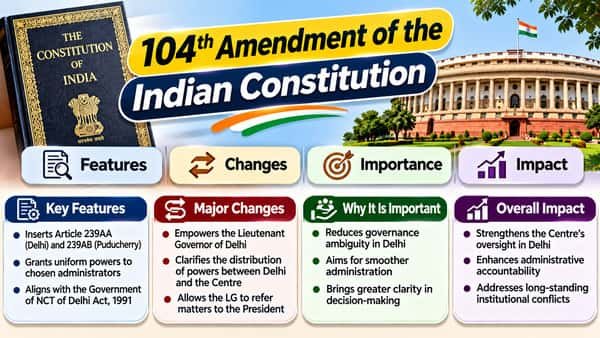
The 104th Constitutional Amendment Act, 2019 amended Article 334 of the Constitution.
Its primary purpose was to continue the reservation of seats for Scheduled Castes and Scheduled Tribes in the Lok Sabha and State Legislative Assemblies for another ten years.
At the same time, the amendment removed the constitutional provision that allowed the nomination of Anglo-Indian members to the Lok Sabha and State Legislative Assemblies if the President or Governor believed that the community was not adequately represented.
This amendment came into force on 25 January 2020, just before the earlier reservation period was due to expire.
Why Was the 104th Amendment Needed?
The Constitution originally provided reservations for SCs and STs in legislatures for only ten years from the commencement of the Constitution. However, Parliament has extended this period several times because these communities continue to require adequate political representation.
The objectives behind the 104th Amendment included:
- Continuing political representation for SCs and STs.
- Promoting social justice and inclusive democracy.
- Recognising that constitutional safeguards were still necessary.
- Reviewing the relevance of Anglo-Indian nominated seats in the present context.
The amendment reflected Parliament’s view that while reservations for SCs and STs remained necessary, the special provision for Anglo-Indian nomination was no longer required.
Key Features of the 104th Constitutional Amendment
1. Extension of Reservation for SCs and STs
The amendment extended the reservation of seats for:
- Scheduled Castes (SCs)
- Scheduled Tribes (STs)
in:
- Lok Sabha
- State Legislative Assemblies
The reservation was extended for another ten years, up to 25 January 2030.
2. Removal of Anglo-Indian Reservation
Before this amendment:
- The President of India could nominate up to two Anglo-Indian members to the Lok Sabha if the community was considered inadequately represented.
- Governors could also nominate one Anglo-Indian member to State Legislative Assemblies where permitted.
The 104th Amendment discontinued these nomination provisions, bringing an end to reserved Anglo-Indian representation through nomination.
3. Amendment to Article 334
Article 334 originally fixed a time limit for reservations and special representation.
The 104th Amendment revised this provision by:
- Extending SC/ST reservation.
- Omitting the reference to Anglo-Indian representation by nomination.
How Did the 104th Amendment Change Earlier Provisions?
Before January 2020, both SC/ST reservations and Anglo-Indian nominations were protected under Article 334.
After the amendment:
| Before Amendment | After Amendment |
|---|---|
| Reservation for SCs and STs | Continued until 25 January 2030 |
| Anglo-Indian nominated seats | Discontinued |
| Article 334 covered both provisions | Article 334 now continues only SC/ST reservation |
This marked a significant constitutional change in legislative representation.
Importance of the 104th Amendment
The amendment is considered important for several reasons.
Strengthening Political Representation
By extending reservations, Parliament ensured that Scheduled Castes and Scheduled Tribes continue to have adequate representation in legislative bodies.
Supporting Social Justice
The amendment reinforces the constitutional commitment to protecting historically disadvantaged communities and promoting inclusive governance.
Updating Constitutional Provisions
The removal of Anglo-Indian nominated seats reflected Parliament’s assessment that the special constitutional arrangement was no longer necessary in its existing form.
Ensuring Democratic Continuity
Without this amendment, the reservation of seats for SCs and STs would have expired, affecting their guaranteed legislative representation.
Impact of the 104th Constitutional Amendment
The amendment has had several constitutional and political effects.
Continued Representation
SC and ST communities continue to receive reserved representation in Parliament and State Assemblies.
End of Anglo-Indian Nomination
The constitutional practice of nominating Anglo-Indian representatives to legislatures has come to an end.
Constitutional Stability
The amendment ensured that legislative representation for disadvantaged communities continued without interruption.
Influence on Constitutional Law
The amendment is frequently discussed in constitutional law, public administration, and competitive examinations because it deals with legislative representation and constitutional safeguards.
Criticism and Discussion
Like many constitutional amendments, the 104th Amendment has also been discussed from different perspectives.
Some supported the continuation of SC/ST reservation, stating that social inequalities still exist and political representation remains essential.
Others debated the decision to discontinue Anglo-Indian nominated seats, arguing that the community had historically enjoyed constitutional recognition. However, the government maintained that the existing demographic and representation framework no longer justified the continuation of this special provision.
These discussions reflect the broader constitutional debate on balancing equality, representation, and evolving democratic needs.
FAQs
Q1. What is the 104th Amendment of the Indian Constitution?
A. The 104th Constitutional Amendment Act, 2019 extended the reservation of seats for Scheduled Castes and Scheduled Tribes in the Lok Sabha and State Legislative Assemblies for another ten years while ending the nomination of Anglo-Indian members.
Q2. Which Article was amended by the 104th Constitutional Amendment?
A. The amendment primarily modified Article 334 of the Constitution of India.
Q3. Until when has the reservation for SCs and STs been extended?
A. The reservation has been extended until 25 January 2030, unless Parliament decides otherwise through a future constitutional amendment.
Q4. Did the 104th Amendment remove reservations for SCs and STs?
A. No. It continued the reservation for Scheduled Castes and Scheduled Tribes but discontinued the constitutional provision for the nomination of Anglo-Indian members to the Lok Sabha and State Legislative Assemblies.
Disclaimer: This article is intended for educational and informational purposes only. It provides a simplified explanation of the 104th Constitutional Amendment based on the Constitution of India and publicly available legal information. For academic, legal, or professional use, always refer to the latest constitutional provisions, official notifications, and judicial interpretations.