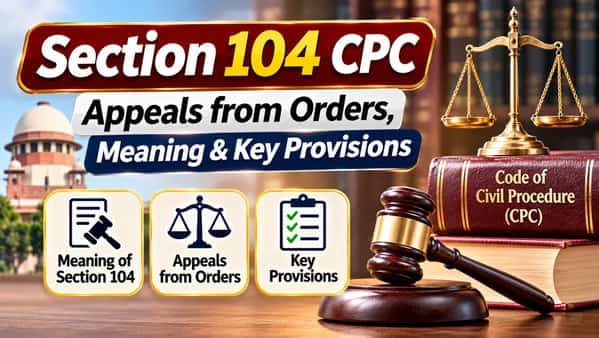
Not every dispute in a civil court ends with a final judgment. During the course of a lawsuit, courts pass numerous interim or procedural orders relating to injunctions, appointment of receivers, rejection of applications, amendment of pleadings, and other important issues. Sometimes, these orders can significantly affect the rights of the parties even before the case is finally decided. To ensure fairness while also preventing unnecessary delays in litigation, the Code of Civil Procedure, 1908 (CPC) provides a limited right to challenge certain orders through Section 104.
Section 104 is an important provision because it specifies which orders are appealable and makes it clear that not every order passed by a civil court can be challenged through an appeal. It works alongside Order XLIII Rule 1 of the CPC, which lists many of the appealable orders. Understanding Section 104 is essential for litigants, law students, advocates, judiciary aspirants, and anyone involved in civil litigation because it helps determine when an appeal is legally maintainable.
Section 104 CPC: Overview
| Particular | Details |
|---|---|
| Act | Code of Civil Procedure, 1908 |
| Section | Section 104 |
| Subject | Appeals from orders |
| Objective | Specify the orders against which an appeal is permitted |
| Related Provision | Order XLIII Rule 1 of the CPC |
| Applies To | Civil court proceedings |
| Importance | Limits appeals to specified orders and reduces unnecessary litigation |
What is Section 104 of the CPC?
Section 104 deals with appeals from orders passed by civil courts.
Unlike an appeal against a final decree, Section 104 allows an appeal only against certain specific orders that are either:
- Expressly mentioned in the Code of Civil Procedure; or
- Declared appealable under any other law in force.
The provision ensures that parties can challenge important interim orders while preventing routine procedural orders from delaying the final disposal of cases.
Why is Section 104 Important?
Civil litigation often involves numerous interim orders.
Section 104 helps to:
- Protect the rights of litigating parties.
- Prevent unnecessary appeals.
- Reduce delays in civil proceedings.
- Promote judicial efficiency.
- Ensure consistency in appellate procedures.
- Balance fairness with speedy justice.
Without such restrictions, almost every interim order could become the subject of an appeal, significantly prolonging litigation.
Key Features of Section 104
1. Appeal Only Against Specified Orders
Section 104 makes it clear that an appeal does not lie against every order passed by a civil court.
Only those orders specifically made appealable under the CPC or another applicable law can be challenged through an appeal.
2. Works Alongside Order XLIII Rule 1
Most appealable orders under Section 104 are listed in Order XLIII Rule 1 of the CPC.
These include certain orders relating to:
- Temporary injunctions.
- Appointment or refusal to appoint a receiver.
- Return of a plaint in specified circumstances.
- Orders under various procedural provisions specifically mentioned in Order XLIII Rule 1.
The maintainability of an appeal depends on whether the order falls within the prescribed categories.
3. Restriction on Further Appeals
One of the important features of Section 104 is that it generally bars a second appeal from an appellate order passed under this section unless another law specifically provides otherwise.
This restriction helps prevent prolonged appellate proceedings.
What is an Appealable Order?
An appealable order is an order that the law specifically permits a higher court to review through an appeal.
Examples may include certain orders relating to:
- Temporary injunctions.
- Receivership.
- Return of plaint.
- Procedural matters specifically listed under Order XLIII Rule 1.
If an order is not declared appealable by law, an appeal under Section 104 is generally not maintainable.
Difference Between a Decree and an Order
Many litigants confuse a decree with an order.
| Decree | Order |
|---|---|
| Determines the rights of parties conclusively regarding the matters in controversy | Decides procedural or incidental matters during litigation |
| Generally appealable under Section 96 CPC | Appealable only if permitted under Section 104 or other provisions |
| Usually passed at the conclusion of the suit | May be passed at different stages of the proceedings |
Understanding this distinction is essential when deciding the appropriate legal remedy.
Relationship Between Section 104 and Order XLIII Rule 1
Section 104 provides the statutory right of appeal, while Order XLIII Rule 1 identifies many of the specific orders against which such appeals are permitted.
Together, they create a structured appellate mechanism that allows review of important interim decisions without opening the door to appeals against every procedural order.
When Can an Appeal Be Filed Under Section 104?
An appeal may generally be filed when:
- The impugned order is specifically made appealable under the CPC or another law.
- The appeal is filed before the competent appellate court.
- The applicable limitation period and procedural requirements are complied with.
Failure to satisfy these legal requirements may result in dismissal of the appeal.
Importance of Section 104 in Civil Litigation
Section 104 serves several important functions.
It:
- Prevents unnecessary litigation.
- Protects parties from serious procedural injustice.
- Promotes speedy disposal of civil suits.
- Ensures judicial discipline.
- Reduces repeated appeals.
- Provides clarity regarding appellate remedies.
The provision strikes a balance between safeguarding legal rights and ensuring efficient administration of justice.
Landmark Judicial Principles
Indian courts have consistently interpreted Section 104 in a restrictive manner.
Some important principles emerging from judicial decisions include:
- The right of appeal is a statutory right and cannot be assumed unless expressly provided by law.
- Only orders specifically declared appealable can be challenged under Section 104.
- Courts cannot create a right of appeal through interpretation where the statute does not provide one.
These principles reinforce the limited nature of appeals from orders.
Practical Tips for Litigants
If you wish to challenge an order passed by a civil court:
- Verify whether the order is appealable under Section 104 and Order XLIII Rule 1.
- File the appeal within the prescribed limitation period.
- Obtain certified copies of the relevant order where required.
- Consult an advocate before initiating appellate proceedings.
- Ensure that all procedural requirements are properly complied with.
Taking timely legal advice helps avoid procedural defects that could affect the maintainability of an appeal.
Frequently Asked Questions (FAQs)
Q1. What is Section 104 of the CPC?
A. Section 104 of the Code of Civil Procedure, 1908 (CPC) provides a statutory right to appeal against certain specified orders passed by civil courts.
Q2. Can every civil court order be appealed under Section 104?
A. No. Only those orders that are expressly made appealable under the CPC or another applicable law can generally be challenged under Section 104. Not every interlocutory or procedural order is independently appealable.
Q3. What is the relationship between Section 104 and Order XLIII Rule 1?
A. Section 104 establishes the statutory framework for appeals from orders, while Order XLIII Rule 1 of the CPC identifies many of the specific orders against which an appeal can be filed. The two provisions are therefore commonly read together.
Q4. Is a second appeal permitted against an appellate order under Section 104?
A. Generally, no. Section 104(2) of the CPC provides that no appeal shall lie from an order passed in appeal under Section 104. Any further remedy would depend on the circumstances and other remedies available under applicable law.
Disclaimer: This article is intended for general informational and educational purposes only. It provides a simplified overview of Section 104 of the Code of Civil Procedure, 1908 and should not be treated as legal advice. The maintainability of an appeal depends on the facts of each case, the applicable provisions of the CPC, judicial precedents, and procedural requirements. For advice regarding any civil litigation or appellate remedy, consult a qualified legal professional.