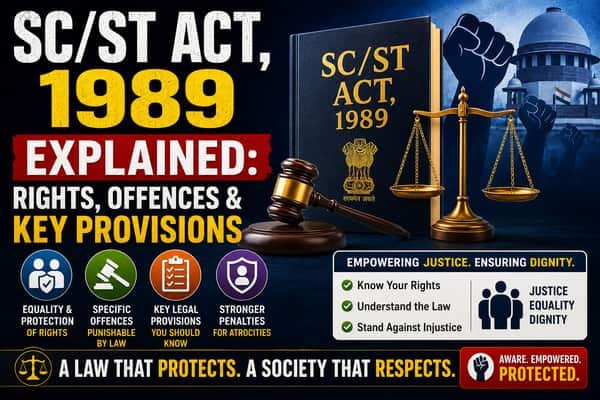
India’s Constitution guarantees equality, dignity, and justice for every citizen. Yet, members of the Scheduled Castes (SCs) and Scheduled Tribes (STs) have historically faced discrimination, violence, social exclusion, and caste-based atrocities. To provide stronger legal protection against such offences and ensure speedy justice for victims, Parliament enacted the Scheduled Castes and Scheduled Tribes (Prevention of Atrocities) Act, 1989, commonly known as the SC/ST Act.
The Act is one of India’s most significant social justice laws. It not only criminalizes specific atrocities committed against members of Scheduled Castes and Scheduled Tribes but also provides for special courts, victim protection, rehabilitation, and stricter punishment for offenders. Understanding this law is important for citizens, public servants, employers, students, legal professionals, and community leaders because it promotes equality, safeguards constitutional rights, and helps prevent caste-based discrimination.
SC/ST (Prevention of Atrocities) Act, 1989: Overview
| Particular | Details |
|---|---|
| Full Name | Scheduled Castes and Scheduled Tribes (Prevention of Atrocities) Act, 1989 |
| Common Name | SC/ST Act, 1989 |
| Enacted | 1989 |
| Objective | Prevent atrocities and protect the rights of Scheduled Castes and Scheduled Tribes |
| Applicable To | Offences committed against members of Scheduled Castes and Scheduled Tribes as specified under the Act |
| Key Features | Special offences, enhanced punishments, Special Courts, victim relief and rehabilitation |
| Implemented By | State Governments, law enforcement agencies, and Special Courts |
| Importance | Promotes equality, dignity, and protection against caste-based atrocities |
What is the SC/ST Act, 1989?
The Scheduled Castes and Scheduled Tribes (Prevention of Atrocities) Act, 1989 is a special legislation enacted to prevent offences and atrocities committed against members of the Scheduled Castes and Scheduled Tribes.
The Act recognizes that general criminal laws alone were not sufficient to address caste-based violence and discrimination. It therefore identifies specific acts as offences when committed against members of these communities on the grounds of their caste or tribe and provides enhanced legal safeguards for victims.
The law has been amended over time to strengthen protections, expand the list of offences, improve victim support, and ensure more effective implementation.
Why Was the SC/ST Act Introduced?
Although constitutional guarantees prohibit discrimination, incidents of caste-based violence and social oppression continued in many parts of the country.
The Act was introduced to:
- Prevent caste-based atrocities.
- Protect the dignity of SC and ST communities.
- Ensure speedy investigation and trial.
- Provide relief and rehabilitation to victims.
- Strengthen legal accountability.
- Promote equality and social justice.
- Deter discrimination through stricter penalties.
The legislation reflects India’s commitment to protecting vulnerable communities and upholding constitutional values.
Who is Protected Under the Act?
The Act specifically protects individuals who belong to:
- Scheduled Castes (SCs)
- Scheduled Tribes (STs)
Protection applies in cases where offences specified under the Act are committed against members of these communities because of their caste or tribal identity.
What Are Atrocities Under the SC/ST Act?
The Act identifies various acts as offences when committed under the circumstances covered by the legislation.
Examples include:
- Intentionally insulting or intimidating a member of an SC or ST with the intent to humiliate in public view.
- Wrongfully dispossessing a person from land or property.
- Preventing access to public places or facilities.
- Committing physical assault in circumstances covered by the Act.
- Social or economic boycott where prohibited by law.
- Sexual offences that attract the application of the Act along with other relevant laws.
- Damage to property motivated by caste-based discrimination.
- Forcing a person into degrading or humiliating acts.
Whether an offence falls within the Act depends on the specific facts and the legal requirements prescribed by the statute.
Key Features of the SC/ST Act
1. Special Protection Against Atrocities
The Act creates specific offences designed to address caste-based discrimination and violence that may not be adequately covered under general criminal law.
2. Enhanced Punishments
Many offences under the Act carry stricter punishments compared to similar offences under general criminal law because of the discriminatory motive involved.
3. Special Courts
State Governments establish or designate Special Courts or Exclusive Special Courts for the speedy trial of offences under the Act.
These courts aim to reduce delays and improve access to justice for victims.
4. Relief and Rehabilitation
Victims and their families may be entitled to relief, rehabilitation, and other assistance in accordance with the Act and the applicable rules framed by the Government.
Support measures may include:
- Financial assistance
- Rehabilitation
- Medical aid
- Legal assistance
- Protection where required
Responsibilities of Public Authorities
The Act places several responsibilities on governments and public officials.
These include:
- Registering complaints promptly.
- Conducting fair investigations.
- Protecting victims and witnesses.
- Preventing intimidation.
- Completing investigations within the prescribed legal framework.
- Monitoring implementation of the Act.
- Creating public awareness about legal rights.
Effective implementation is essential for achieving the objectives of the law.
Rights of Victims
Victims covered under the Act have several important legal protections.
These include the right to:
- File a complaint.
- Receive fair investigation.
- Protection from intimidation.
- Access legal assistance.
- Seek relief and rehabilitation.
- Participate in legal proceedings where permitted.
- Receive a speedy trial before the appropriate court.
The law seeks to ensure that victims are treated with dignity throughout the justice process.
Recent Amendments and Strengthening of the Law
The SC/ST Act has been amended to strengthen its effectiveness and expand protections.
Important developments include:
- Addition of new categories of offences.
- Stronger victim protection measures.
- Clearer responsibilities for public authorities.
- Greater emphasis on speedy investigation and trial.
- Enhanced safeguards against discrimination.
These amendments reflect continuing efforts to improve enforcement and ensure better access to justice.
Importance of the SC/ST Act in Modern India
The Act continues to play a vital role in promoting constitutional values.
Its significance includes:
- Protecting vulnerable communities.
- Reducing caste-based discrimination.
- Encouraging equal treatment.
- Strengthening public confidence in the justice system.
- Promoting social inclusion.
- Supporting human dignity and equality before the law.
Awareness of the Act also helps citizens understand the legal consequences of discriminatory behaviour and reinforces the importance of respecting the rights of every individual.
Practical Steps If an Atrocity Occurs
If a person belonging to a Scheduled Caste or Scheduled Tribe experiences an offence covered by the Act, some practical steps include:
- Report the incident to the nearest police station without delay.
- Preserve any available evidence, such as photographs, videos, or documents.
- Obtain medical assistance if required.
- Record the names of witnesses, where possible.
- Seek legal assistance and information about available relief and rehabilitation measures.
Taking timely action can help ensure that the matter is investigated in accordance with the law.
Frequently Asked Questions (FAQs)
1. Who is protected under the SC/ST Act?
The Act provides protection to members of the Scheduled Castes and Scheduled Tribes against offences specifically covered under the legislation.
2. Does the Act provide for Special Courts?
Yes. The Act provides for Special Courts or Exclusive Special Courts to facilitate the speedy trial of offences under the Act.
3. Can victims receive financial assistance?
Yes. Victims and their families may be eligible for relief, rehabilitation, and financial assistance as provided under the Act and the applicable rules, depending on the nature of the offence.
4. Can an offence under the Indian Penal Code also be covered under the SC/ST Act?
Yes. In appropriate cases, an act may attract provisions of both the Indian criminal law and the SC/ST Act if the legal requirements of each law are satisfied.
Disclaimer: This article is intended for general informational and educational purposes only. It provides a simplified overview of the Scheduled Castes and Scheduled Tribes (Prevention of Atrocities) Act, 1989 and should not be considered legal advice. The application of the Act depends on the specific facts of each case, relevant amendments, and judicial interpretation. Individuals seeking advice regarding a particular legal matter should consult a qualified legal professional or the appropriate authorities.