Every citizen expects to live with dignity, freedom, equality, and protection under the law. Whether it is expressing an opinion on social media, practising a religion, seeking equal opportunities in government jobs, or approaching the courts when rights are violated, these freedoms are protected by the Fundamental Rights guaranteed by the Constitution of India. They form the foundation of Indian democracy and ensure that the government functions within constitutional limits.
Fundamental Rights are not just legal provisions found in the Constitution—they directly affect the daily lives of every Indian. They safeguard individuals against arbitrary actions, promote equality, and protect personal liberty. From students and employees to business owners and ordinary citizens, everyone benefits from these constitutional guarantees. Understanding Fundamental Rights is essential for every Indian, especially students preparing for competitive examinations, law aspirants, and citizens who wish to know their constitutional rights and responsibilities.

Fundamental Rights: Overview
| Particular | Details |
|---|---|
| Part of Constitution | Part III |
| Articles Covered | Articles 12 to 35 |
| Enforced By | Courts of Law |
| Objective | Protect individual liberty and ensure equality |
| Number of Rights | Six Fundamental Rights |
| Constitutional Remedy | Article 32 |
| Importance | Protects citizens from arbitrary actions and strengthens democracy |
What are Fundamental Rights?
Fundamental Rights are the basic rights guaranteed by the Constitution of India to ensure the dignity, liberty, equality, and freedom of individuals.
These rights are enforceable by courts, meaning that if any Fundamental Right is violated, a person can seek legal protection through the judiciary.
Originally, the Constitution provided seven Fundamental Rights, but after the 44th Constitutional Amendment, 1978, the Right to Property ceased to be a Fundamental Right and became a constitutional legal right under Article 300A.
Today, the Constitution guarantees six Fundamental Rights.
Why are Fundamental Rights Important?
Fundamental Rights play a vital role in protecting democracy and individual freedom.
They help to:
- Ensure equality before the law.
- Protect personal liberty.
- Prevent discrimination.
- Safeguard religious freedom.
- Protect against exploitation.
- Promote social justice.
- Strengthen the rule of law.
- Empower citizens to challenge unconstitutional actions.
Without these rights, democratic governance would not be effective.
Six Fundamental Rights Under the Constitution
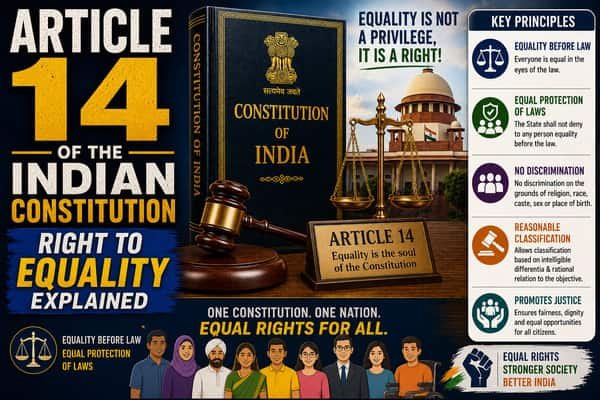
1. Right to Equality (Articles 14–18)
The Right to Equality ensures that every individual is treated equally before the law.
It includes:
- Equality before law.
- Equal protection of laws.
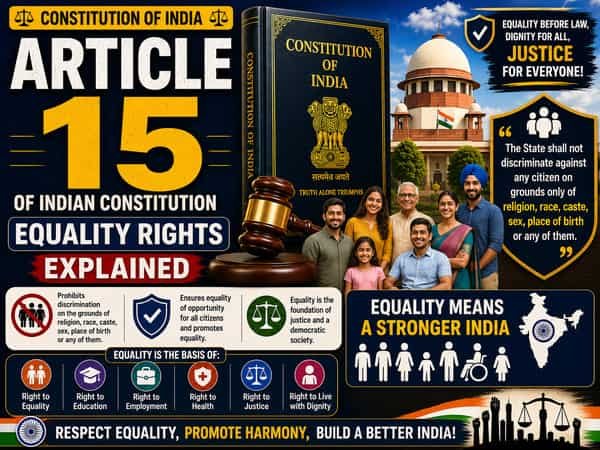
- Prohibition of discrimination on grounds such as religion, race, caste, sex, or place of birth.
- Equality of opportunity in public employment.
- Abolition of untouchability.
- Abolition of titles (except military and academic distinctions).
This right promotes fairness and equal treatment for all citizens.
2. Right to Freedom (Articles 19–22)
The Right to Freedom guarantees several essential freedoms necessary for democratic living.
These include:
- Freedom of speech and expression.
- Freedom of peaceful assembly.
- Freedom to form associations or unions.
- Freedom to move freely throughout India.
- Freedom to reside and settle anywhere in India.
- Freedom to practise any profession or carry on any lawful occupation, trade, or business.
Articles 20, 21, and 22 further provide protection relating to criminal convictions, life and personal liberty, and safeguards against arbitrary arrest and detention.
Among these, Article 21 is regarded as one of the most significant provisions because it protects the right to life and personal liberty.
3. Right Against Exploitation (Articles 23–24)
This right protects individuals from exploitation and forced labour.
It prohibits:
- Human trafficking.
- Forced labour (begar).
- Child labour in hazardous occupations for children below the prescribed age.
The objective is to ensure human dignity and protect vulnerable sections of society.
4. Right to Freedom of Religion (Articles 25–28)
India is a secular country, and every person enjoys the freedom to follow, practise, and propagate religion, subject to public order, morality, health, and other constitutional limitations.
This right includes:
- Freedom of conscience.
- Freedom to profess, practise, and propagate religion.
- Freedom to manage religious affairs.
- Freedom from compulsory religious instruction in certain educational institutions.
It promotes religious harmony and peaceful coexistence.
5. Cultural and Educational Rights (Articles 29–30)
These rights protect the language, culture, and educational interests of minorities.
They allow minority communities to:
- Preserve their language, script, and culture.
- Establish and administer educational institutions of their choice.
These provisions help maintain India’s cultural diversity.
6. Right to Constitutional Remedies (Article 32)
Article 32 enables citizens to approach the Supreme Court directly for enforcement of their Fundamental Rights.
The Supreme Court and High Courts may issue constitutional writs such as:
- Habeas Corpus
- Mandamus
- Certiorari
- Prohibition
- Quo Warranto
Dr. B. R. Ambedkar described Article 32 as the “Heart and Soul of the Constitution” because it provides an effective remedy against the violation of Fundamental Rights.
Are Fundamental Rights Absolute?
No. Fundamental Rights are not absolute.
The Constitution permits the State to impose reasonable restrictions on certain rights in the interests of:
- National security.
- Public order.
- Morality.
- Sovereignty and integrity of India.
- Friendly relations with foreign States.
- Prevention of crime.
The purpose is to balance individual freedom with the interests of society.
Who Can Enjoy Fundamental Rights?
Some Fundamental Rights are available to all persons, including foreign nationals, while others are available only to Indian citizens.
For example:
- Articles 14 and 21 generally apply to all persons.
- Article 19 freedoms are available only to citizens of India.
This distinction is important in constitutional law.
Fundamental Rights and Fundamental Duties
Fundamental Rights provide freedoms, whereas Fundamental Duties encourage responsible citizenship.
| Fundamental Rights | Fundamental Duties |
|---|---|
| Guarantee individual freedoms | Encourage responsible behaviour |
| Legally enforceable | Generally not directly enforceable in courts |
| Included in Part III | Included in Part IVA |
| Protect citizens from arbitrary actions | Promote constitutional values and national unity |
Both work together to strengthen democracy.
Importance of Fundamental Rights in Modern India
Fundamental Rights continue to influence every aspect of public life.
They help:
- Protect democratic institutions.
- Promote equality and justice.
- Safeguard personal freedom.
- Encourage social harmony.
- Protect minority interests.
- Ensure government accountability.
- Strengthen constitutional governance.
They remain one of the strongest pillars of the Indian constitutional framework.
Frequently Asked Questions (FAQs)
1. How many Fundamental Rights are there in India?
At present, the Constitution of India guarantees six Fundamental Rights under Part III.
2. Which Articles deal with Fundamental Rights?
Fundamental Rights are contained in Articles 12 to 35 of the Constitution of India.
3. Can Fundamental Rights be restricted?
Yes. Certain Fundamental Rights are subject to reasonable restrictions imposed by law in the interests of public order, security, morality, and other constitutional grounds.
4. Which Fundamental Right allows citizens to approach the Supreme Court?
Article 32, known as the Right to Constitutional Remedies, enables citizens to approach the Supreme Court for the enforcement of their Fundamental Rights.
Disclaimer: This article is intended for general informational and educational purposes only. It provides a simplified overview of the Fundamental Rights under Part III of the Constitution of India based on the constitutional provisions and the law applicable at the time of writing. It should not be treated as legal advice. The interpretation and application of Fundamental Rights may vary depending on judicial decisions, constitutional amendments, and the facts of each case. For legal guidance on any constitutional issue, consult a qualified legal professional.