Imagine ordering a smartphone online and receiving a damaged product, paying for a service that is never delivered, or being misled by a false advertisement. Such situations are common, and many consumers are unsure about their legal rights or the steps they can take to seek compensation. The Consumer Protection Act, 2019 was enacted to strengthen consumer rights in India and provide faster, more effective remedies against unfair trade practices, defective goods, and deficient services.
With the rapid growth of e-commerce, digital payments, online marketplaces, and app-based services, consumer disputes have become more complex than ever. The Consumer Protection Act, 2019 modernizes India’s consumer laws by introducing provisions for online shopping, product liability, mediation, and stricter action against misleading advertisements. Whether you shop online, buy products from local stores, use banking services, book travel tickets, or subscribe to digital platforms, understanding this law can help you protect your rights and make informed purchasing decisions.
Consumer Protection Act, 2019: Overview
| Particular | Details |
|---|---|
| Full Name | Consumer Protection Act, 2019 |
| Enacted | 2019 |
| Effective From | 20 July 2020 (in phases as notified) |
| Objective | Protect consumer rights and provide an effective mechanism for resolving consumer disputes |
| Applicable To | Consumers, manufacturers, sellers, service providers, and e-commerce entities |
| Governing Authority | Central Consumer Protection Authority (CCPA) and Consumer Commissions |
| Covers | Defective goods, deficient services, unfair trade practices, misleading advertisements, product liability, and e-commerce |
| Importance | Strengthens consumer rights and improves access to justice |
What is the Consumer Protection Act, 2019?
The Consumer Protection Act, 2019 is the primary legislation that safeguards the interests of consumers in India. It provides legal remedies when consumers receive defective products, deficient services, or become victims of unfair or misleading business practices.
The Act replaced the Consumer Protection Act, 1986 to address modern challenges arising from online shopping, digital transactions, and changing business models. It also introduced new concepts such as the Central Consumer Protection Authority (CCPA), product liability, and mediation for faster dispute resolution.
Why Was the Consumer Protection Act, 2019 Introduced?
The earlier consumer protection framework was introduced before the rise of online commerce and digital services. As consumer transactions evolved, stronger legal protections became necessary.
The Act was introduced to:
- Strengthen consumer rights.
- Regulate unfair trade practices.
- Protect online shoppers.
- Address misleading advertisements.
- Improve dispute resolution.
- Increase accountability of manufacturers and sellers.
- Promote fair business practices.
The law aims to create a balanced marketplace where both consumers and businesses operate responsibly.
Who is a Consumer Under the Act?
A consumer generally refers to a person who purchases goods or hires or avails services for consideration and not for resale or commercial purposes, subject to the exceptions provided under the Act.
Consumers may include individuals purchasing:
- Household goods
- Electronic products
- Food items
- Insurance policies
- Banking services
- Healthcare services
- Educational services (subject to applicable legal interpretation)
- Online products and services
The exact applicability depends on the facts of each case and the provisions of the Act.
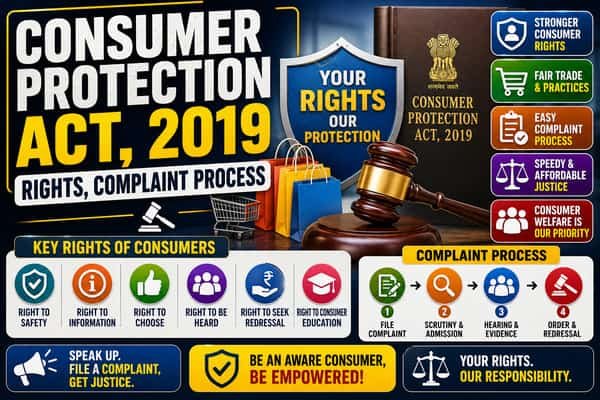
Consumer Rights Under the Consumer Protection Act
The Act recognizes several important rights of consumers.
1. Right to Safety
Consumers have the right to protection against goods and services that may be hazardous to life or property.
2. Right to Information
Consumers are entitled to receive accurate information regarding:
- Price
- Quality
- Quantity
- Ingredients
- Manufacturing details
- Risks associated with products
This enables informed purchasing decisions.
3. Right to Choose
Consumers should have access to a variety of goods and services at competitive prices without being subjected to unfair restrictions.
4. Right to Be Heard
Consumers have the right to present their grievances before the appropriate consumer authorities.
5. Right to Seek Redressal
Consumers can seek remedies against:
- Defective goods
- Deficient services
- Unfair trade practices
- Overcharging
- Misleading advertisements
6. Right to Consumer Education
The Act encourages awareness so that consumers understand their legal rights and responsibilities.
Key Features of the Consumer Protection Act, 2019
Central Consumer Protection Authority (CCPA)
One of the major reforms introduced by the Act is the establishment of the Central Consumer Protection Authority (CCPA).
The CCPA is empowered to:
- Investigate violations of consumer rights.
- Order the recall of unsafe goods.
- Direct reimbursement in appropriate cases.
- Take action against misleading advertisements.
- Promote and protect consumer interests.
Product Liability
The Act introduces product liability provisions, enabling consumers to seek compensation from manufacturers, sellers, or service providers in appropriate cases where defective products or deficient services cause harm.
This encourages businesses to maintain quality and safety standards.
E-commerce Protection
The Act recognizes the growing importance of online shopping.
E-commerce platforms are expected to comply with applicable legal requirements relating to transparency, consumer information, grievance redressal, and fair business practices.
This strengthens protection for online buyers.
Mediation
The Act encourages mediation as an alternative method for resolving consumer disputes.
Mediation offers several advantages:
- Faster resolution.
- Lower costs.
- Reduced litigation.
- Mutually acceptable settlements.
It helps resolve suitable disputes without lengthy court proceedings.
Consumer Complaint Process
If a consumer experiences unfair treatment, the Act provides a structured mechanism for seeking relief.
Step 1: Collect Supporting Evidence
Keep relevant documents such as:
- Bills
- Invoices
- Warranty cards
- Receipts
- Emails
- Screenshots
- Product photographs
Step 2: Contact the Seller or Service Provider
Many disputes can be resolved by first communicating with the business and requesting an appropriate remedy.
Step 3: File a Consumer Complaint
If the issue remains unresolved, the consumer may file a complaint before the appropriate Consumer Commission having jurisdiction under the Act.
Complaints may also be filed electronically where facilities are available.
Step 4: Participate in Proceedings
The Consumer Commission examines the complaint, hears the parties, and passes appropriate orders based on the evidence and the applicable law.
Relief Available to Consumers
Depending on the facts of the case, Consumer Commissions may grant various forms of relief.
These may include:
- Replacement of defective goods.
- Refund of the purchase price.
- Repair of products.
- Compensation for loss or injury.
- Discontinuation of unfair trade practices.
- Withdrawal of misleading advertisements in appropriate cases.
The nature of relief depends on the circumstances and the Commission’s findings.
Responsibilities of Consumers
Consumers also have certain responsibilities.
These include:
- Reading product labels carefully.
- Preserving purchase invoices.
- Using products according to instructions.
- Reporting defects promptly.
- Avoiding false or frivolous complaints.
- Verifying seller information before online purchases.
Responsible consumer behaviour contributes to a fair marketplace.
Importance of the Consumer Protection Act
The Consumer Protection Act, 2019 has significantly strengthened consumer confidence in India.
Its benefits include:
- Better protection for online shoppers.
- Greater accountability of businesses.
- Faster dispute resolution.
- Improved product quality standards.
- Protection against misleading advertisements.
- Stronger enforcement of consumer rights.
The Act plays an important role in promoting transparency and fairness in the modern marketplace.
Frequently Asked Questions (FAQs)
1. Does the Consumer Protection Act apply to online shopping?
Yes. The Act specifically covers e-commerce transactions and provides protection to consumers purchasing goods or services through online platforms, subject to the applicable legal provisions.
2. Can I file a consumer complaint without hiring a lawyer?
Yes. Consumers may file complaints before the appropriate Consumer Commission without necessarily engaging a lawyer, although legal assistance may be beneficial in complex matters.
3. What documents should I keep before filing a consumer complaint?
You should preserve invoices, bills, payment receipts, warranty documents, emails, screenshots, photographs, and any other evidence supporting your claim.
4. Can I claim compensation for a defective product?
Yes. Depending on the facts of the case and the provisions of the Act, consumers may seek compensation, replacement, repair, refund, or other relief available under the law.
Disclaimer: This article is intended for general informational and educational purposes only. It provides a simplified overview of the Consumer Protection Act, 2019 and should not be considered legal advice. The application of the Act depends on the specific facts of each case, applicable rules, amendments, and judicial interpretation. Consumers seeking advice on a particular dispute should consult a qualified legal professional or approach the appropriate Consumer Commission or competent authority.